An Uprising in Your Microbial Garden | Why Skipping Dessert Is Never Just a Test of Willpower
You finish dinner. The plate's clear, the kitchen's quiet. Then it begins. A persistent, almost gravitational pull toward the pantry. A whisper in your blood that says the meal isn't finished.
We tell ourselves it's "just a habit." We blame the mind, a lack of willpower.
But is it really the product of billions of neurons? What if the real protest is unfolding below, in the vast, hidden, wildly populous landscape of your gut? Could it really be trillions of beings tiny enough to all fit in a single shot glass?
In this garden, your daily meals are the weather and the fertilizer. The bacteria, fungi, and archaea are the plants. Some are delicate, symbiotic flowers; others are hardy, invasive weeds. And that post-dinner cookie? That's a daily dump of sugar onto one specific plot.
So, suddenly skipping dessert triggers an ecological crisis in your inner world. The carefully balanced society of your gut is thrown into chaos. The sugar-dependent weeds struggle. The crowded-out flowers sense an opening. The very soil itself begins to change.
Our "craving" or "withdrawal" is a biochemical echo of a microbial uprising. This is the story of what happens in the hidden garden of your gut when you change its food supply. And of how you move from being a passive bystander to the wise gardener of your health.
The Gut is a Garden
Forget the simple plumbing diagrams from high school biology. To understand what happens when you change your diet, you need a better map. The most accurate one we have is ecological rather than mechanical.
Close your eyes and picture a lush landscape:
The Soil
Foundation of the garden
This is the gut lining itself. It's a warm, dark, folded expanse covered in a protective layer of nutrient-rich mucus. This structure decides what gets absorbed and keeps out true pathogens.
The Plants
Inhabitants of the garden
This is your microbiome. It's a teeming metropolis of different microbial species. Some are keystone species that stabilize everything. Others are beneficial varieties that support those key microbes. And yes, there are quick-growing, opportunistic weeds. Ones that quickly take over if given the chance.
The Climate
Your role in the garden
Every bite of food, every sip of a drink, every medication is a weather event. It's fertilizer or poison.
You too are a part of this garden. You're its atmosphere and its groundskeeper.
A healthy gut, like a healthy garden, defines itself by its resilient diversity.
It has a wide variety of species with deep, interconnected root systems. This is how it rides out the dry spell of a missed meal, fights off the blight of a passing pathogen, and regenerates from minor damage. Its output is a steady flow of compounds that strengthen the soil and nourish your body.
An unhealthy gut is a monoculture.
The garden might look green and lively, but it's fragile. It's optimized for one condition only. It exhausts the soil and leaves the ground bare to erosion. It produces little of value for the larger ecosystem. A diet high in processed sugar leads to a simple environment.
Why Tend the Garden?
You're the gardener. You hold the watering can and choose the fertilizer. You decide what gets planted and what gets pulled.
But why should you care? Why does it matter whether your garden is a botanical paradise or an overgrown weed patch?
The microbial world within shapes your health, your mind, and your disease risk. A well-tended garden protects and sustains.
Here's what your gut does for you:
The dominant species in your gut control all of this.
When we view it as a garden, craving becomes a report from the soil.
Changing your diet is the most powerful act of landscape management you can perform.
With this map in hand, we can trace exactly what unfolds in the soil when you, the gardener, make a sudden change. Let's start with the most common rebellion:
The Great Sugar Strike.
The Sugar-Fed Monoculture
What’s happening in the garden after a decades-long habit of an after-dinner dessert?
Every evening you walk over to the same corner of your plot and pour a gallon of sugary fertilizer on the soil. For years, it’s been the primary input that corner of the garden knows.
This is your ritual of a nightly sweet. A targeted nutrient stream for a specific subset of your gut's inhabitants.
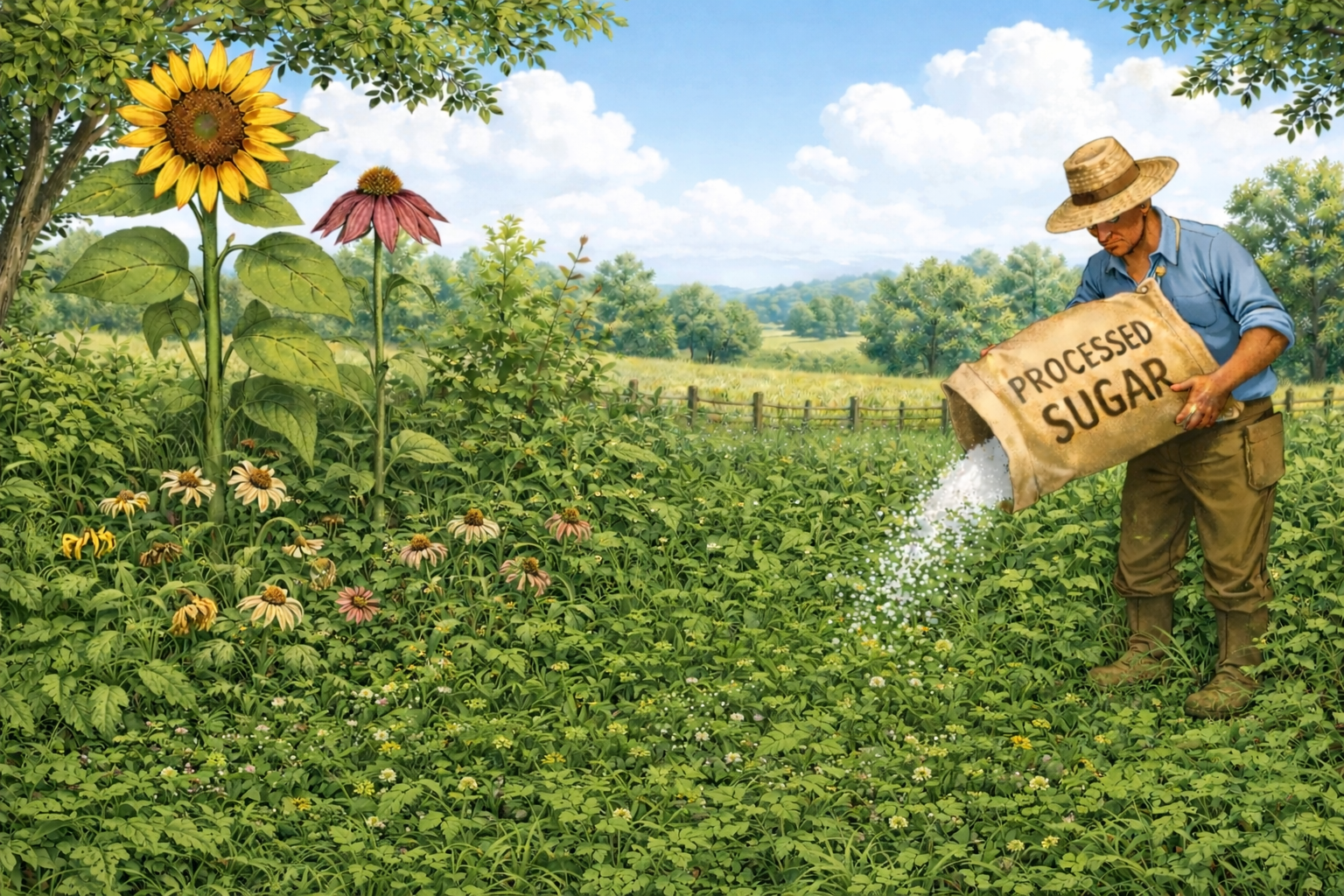
Here's how the garden adapts:
The Weeds Thrive
Microbes, like some Bacteroides and certain yeasts, feasts on simple sugars. They experience a perpetual boom. They have the enzymes to immediately break down this fuel. We’ll call these Sugar Weeds. Every night, they undergo a population explosion.
They Crowd Out the Flowers
The Sugar Weeds are aggressive. They consume the local space, oxygen, and other nutrients. The perennials and flowers are gradually crowded out. These are the helpful microorganisms that slowly break down complex fibers. They're still there, but they're stunted, unable to compete for resources.
The Garden's Identity Simplifies
Over time, this plot becomes a monoculture. It’s no longer a diverse, resilient garden. It stops producing a range of beneficial compounds. Instead, it releases nightly bursts of gases and various organic acids. The gut becomes optimized for one thing: processing the next sugar delivery.
You, the gardener, might not notice this shift. The garden still looks green from above, digestion seems "fine." But it’s now precariously balanced on the expectation of that nightly syrup.
This is the status quo. The balance created by relentless, selective feeding. The state of fragile, specialized equilibrium.
And then, one night, you skip the ritual.
Dessert doesn't come.
In the quiet that follows, chaos begins. The garden's delicate world begins to unravel. Don’t mistake this for a passive process. It's an uprising.
Timeline of a Sugar Strike
When you choose to skip dessert, you’re pulling the primary input from a highly adapted system. The gut depends on that daily dose of nectar. When it fails to arrive, the garden enters a period of chaotic reorganization.
Let’s take a look at what unfolds within, hour by hour, day by day.
The Shock
Hours 0–24In the Garden
The Sugar Weeds, poised for their evening feast, experience a biochemical shock. The fuel doesn’t come. The gassy fermentation that usually follows the sugar's arrival simply doesn't happen.
The Ripple Effect: This quiet is deceptive. The chemical balance of the soil begins a subtle shift. It's the first signal that the old order is changing.
What You Feel
This is the initial, sharp craving. It’s your nervous system detecting the absence of a predicted biochemical event. It's the garden's alarm bell, wired directly into your consciousness.
The Scramble
Days 1–3In the Garden
The Sugar Weeds are starving. They start excreting enzymes to break down anything within reach. Undigested fibers or starches from your dinner become targets. Even the protective mucus layer lining the gut wall is on the menu. This is a destructive, last-resort tactic.
This digestion is inefficient. It creates a messy mix of different gases, odd-smelling compounds, and irritating metabolites. The environment becomes volatile.
Opportunity Knocks: Meanwhile, the stunted perennial flowers sense the disturbance. The aggressive dominance of the Sugar Weeds is faltering. Space and resources are slowly opening up.
What You Feel
This is the full "withdrawal." The bloating, the gassiness, the irritability, the sense that your digestion is "off." You’re hearing the chaotic, chemical noise of a garden fighting for a new order.
The Regrowth
Days 4–14The Critical Choice
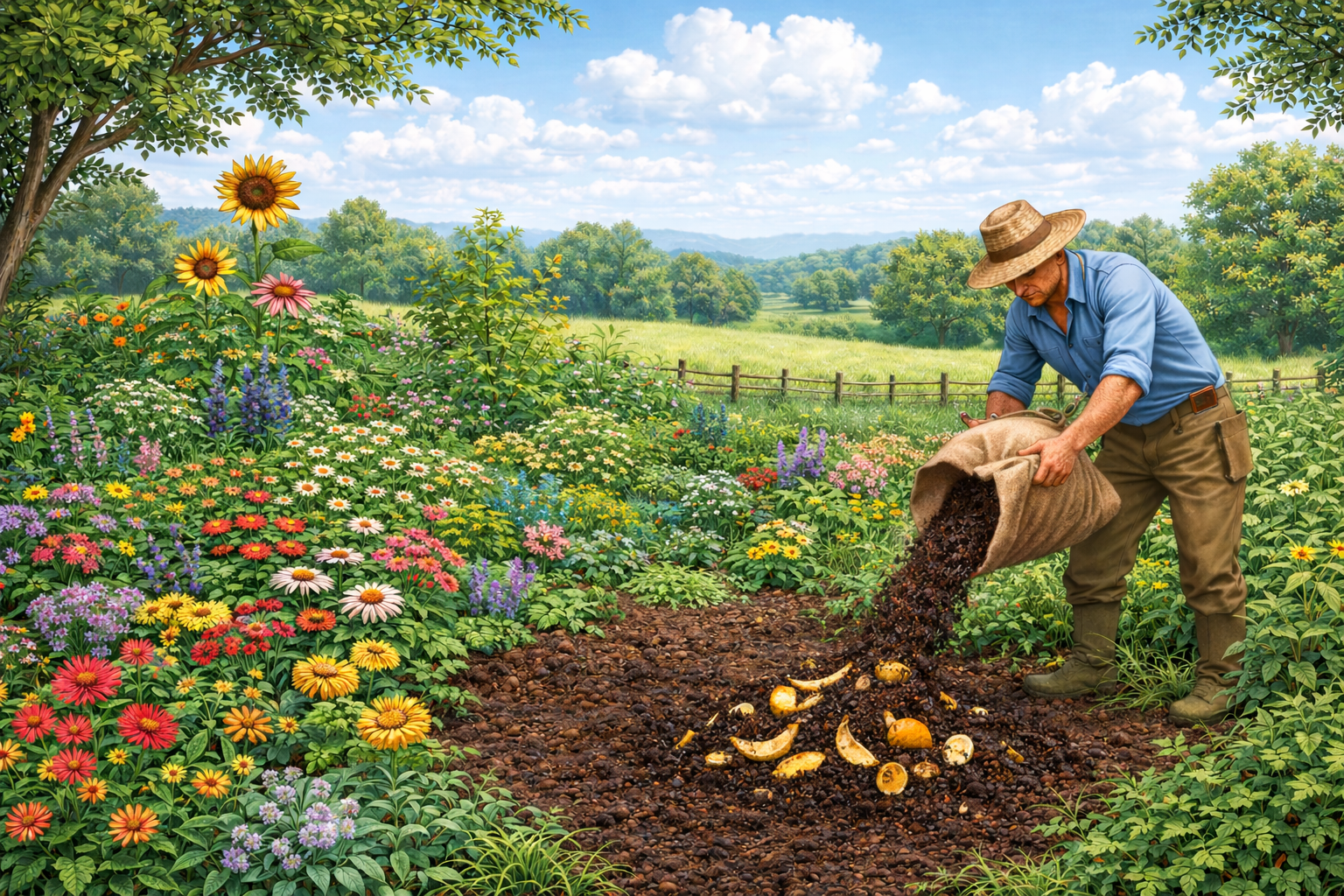
What happens next is up to you. If you reintroduce the sugar fertilizer, the weeds roar back within days. But if you stay the course and begin to add compost, everything changes.
In the Garden
"Compost" is dietary fiber from vegetables, whole grains, legumes, and fruits. When you take in this complex, slow-release fuel, you feed the perennials and flowers.
These fiber-fermenting species finally get the resource they're built for and grow stronger. They form deep, interconnected networks. They produce compounds that fortify your gut wall and signal health to the rest of the body.
What You Feel
Cravings subside and bloating dissipates. Your energy stabilizes, and digestion becomes smooth and regular. The garden is becoming more complex, more stable.
The New Normal
Week 3+In the Garden
The transformation holds. The Sugar Patch is gone. A Botanical Garden has risen in its place.
The Sugar Weeds are reduced to a minor, managed population in their niche. The garden’s richer than ever before. Many microbial species perform similar jobs, making it less vulnerable to future shocks.
What You Feel
You lose the urge, the nightly pull toward sweets. You enjoy them when you choose, and the internal alarm is quiet when you don’t. You are in control. The rebellion’s over; a more peaceful and prosperous kingdom has risen.
This timeline’s a blueprint. If we look, we can see how our garden responds to any major change in its climate patterns.
Tales of Other Gardeners
The Sugar Strike reveals the fundamental rules of your inner world. Change the input, and you change the garden. But you, the gardener, will face other weather patterns. Some you choose, like planting new seeds. Some are imposed on you, like a chemical frost. Let's walk through three more common scenarios using the same lens.
You scatter a packet of acclaimed high-potency probiotics across your garden with hope.
The Process
These are immigrant species arriving in an already crowded land. Whether they take root is a fierce negotiation.
- Do they find a vacant niche? Is there a specific, underutilized food source only they can eat?
- Is the soil ready? Do you provide the right prebiotic fiber to support these microbial aliens?
The Likely Outcome
Despite their short lives, they do have positive effects. But in the end, they fail to establish a permanent, self-sustaining colony. They don’t hang around for long, but they can still leave the garden healthier.
A course of antibiotics is herbicide falling from the sky.
The Process
Broad-spectrum antibiotics scorch the earth; they don’t discriminate. The entire microbiome of plants is devastated. What remains is a gut lining stripped of its microbial cover. Bare, smoking soil. And silence.
The Critical Window
In this barren, post-apocalyptic landscape, the first seeds to blow in dominate. This is when you’re most vulnerable. Hardy, pathogenic weeds will assert a toxic monoculture unchallenged.
The Gardener's Duty
Recovery requires active, urgent reseeding with targeted probiotics and prebiotic fibers. This is steering the regrowth towards a more hospitable direction. The garden may look different than before, but it can become fertile and vibrant once more.
You make a deliberate decision to turn off the rain and the fertilizer. No inputs. A controlled stress test.
The Process
The shallow-rooted, water-hungry Sugar Weeds wither first. The garden sheds its most fragile dependencies. Deeper-rooted species, adapted to hardship, switch to survival mode. They metabolize mucus and dead matter while others starve.
The First Rain
This is the most decisive gardening act of all. What you rain down onto this parched landscape determines the next generation.
- Rain down the icing of a frosted feast? You water the few remaining, desperate Sugar Weeds, triggering an explosive regrowth.
- Rain down the rich compost of a fibrous, whole-food meal? You nourish the root systems of the hardy perennials, encouraging a robust recovery.
The power of the fast is in the re-founding event that ends it.
Practical Gardening Tips for the Inner Gardener
Seeing your gut as a garden makes abstract health advice easier to grasp. It turns abstract ideas into simple ways to care for your body. Click through these slides for some practical tips for maintaining your garden.
Some people view their after-dinner craving as a character flaw. But really, it's an ecological report. And the well-being that comes from a healthy diet? You are literally feeling trillions of microorganisms flourishing. They’re broadcasting health to every cell in your body.
You’re the gardener, not a passenger. You choose the weather.
The Quiet Kingdom
Let’s go back to the start: the calm kitchen, the empty plate, the draw of the pantry.
Now you know the truth of that moment. What you thought was just a small craving or habit was really a message. It was a chemical signal from within, telling you about a sudden change inside. The kingdom, built on the expectation of syrup, was sounding the alarm.
And the alarm carries information.
Viewing your gut as a garden changes everything. You see the intricate, self-organizing, living microverse within. Health transforms from a struggle of punishment and denial to a mindful act of care.
The craving is a weed’s request. Bloating, a sign of chaotic regrowth. The buzz you feel after weeks of good eating is the quiet hum of a rich and lively garden bed, doing its work in silence.
You hold the power to change the input. You choose to send a hailstorm of processed food or a steady, nourishing rain of complexity. The garden will adapt. It'll scramble, collapse, and eventually reorganize into a new state. For better or worse.
So the next time you feel that pull, or the unease of change, pause. Listen. Observe the natural process beneath the surface.
Build yourself a quiet kingdom: a thriving, diverse, and resilient inner world.
Feed your subjects well and you’ll have a long, healthy reign.
You are the gardener.
Tend your plot well.